
What should I teach my pre-schooler before they start school?
If your pre-schooler is starting Reception this September, there's a good chance you've asked yourself this question at least once over the past few months.
"Should I be teaching them something to get them ahead in school?"
Perhaps you've been practising writing their name, or bought letter tracing books. Maybe you've bought alphabet flashcards, searched for preschool summer activities, or found yourself scrolling through videos of children who seem to know every letter sound already.
It can feel as though everyone else's child is racing ahead while you're wondering if you're doing enough.
If that's how you're feeling, you're certainly not alone, and this blog is just for you.
Every summer, thousands of parents across the UK start thinking about the Reception class curriculum and what their child might be expected to know before that first day of school. It's natural to want to give them the best possible start.
The challenge is that there's so much advice available. One website tells you to teach letter sounds. Another recommends handwriting practise. Social media is full of printable worksheets, alphabet games and learning checklists.
It's difficult to know which advice to follow, and let’s be honest... it’s utterly overwhelming.
As an ex-reception teacher, I have a whole list of things I would love for parents to focus more on, especially when it comes to early reading and phonics.
A 2026 survey by Kindred Squared found that teachers believe 37% of children are not school-ready when they begin reception. Interestingly, when teachers were asked what school readiness looked like, they weren't talking about children already reading books or writing sentences. They spoke about communication, independence, listening, confidence and the ability to learn alongside others.
Reading is part of that journey, but it doesn't begin where many of us assume it does.
I feel it necessary to add here that I dislike the phrase ‘school ready’. I think there are lots of caveats to that phrase and the education system as a whole needs reworking to best fit the children of today. However, for the sake of this blog, I’m using ‘school ready’ to mean developing the skills not explicitly taught in reception.
As an Early Years teacher, phonics specialist and former SENCo, I've supported over 700 children to learn to read (across my career and now in my business). One thing I've learnt is that the children who settle into phonics most confidently aren't always the ones who start school knowing letter sounds. It’s the children who know what to do with letter sounds – pull them apart, put them together, switch them out, that understand phonics the quickest and easiest.
They've spent time listening.
Talking.
Singing.
Playing with language and sound.
What Many Parents Think They Should Teach Before School
If you asked a group of parents what they wanted their child to know before starting school, you'd probably hear similar answers.
- "I want them to recognise lots of letter sounds, so they don't get left behind."
- "I hope they can write their name."
- "It would be lovely if they could read a few simple words."
Those goals make complete sense – when you think about your child learning to read, you think about learning letter sounds. I
After all, we know children will begin learning to read in Reception, so it's easy to think getting a head start on the Reception curriculum will make everything easier. Some children are interested in letters before they start school, and there's nothing wrong with encouraging that interest. If your pre-schooler loves spotting letters on road signs or asking what words say, follow their lead.
The important thing is remembering that learning to read isn't simply about recognising letters. Letters are only one piece of a much bigger picture. Before children learn that letters represent sounds, they first need lots of opportunities to hear sounds, notice patterns in language and develop their listening skills. Those early experiences become the foundation for everything that comes later.
This stage before phonics is called phonological awareness, or phase 1 phonics.
What Is Phonological Awareness?
Phonological awareness might sound like one of those educational terms that belongs in a teacher training course, but the idea behind it is actually very simple.
It's all about helping children notice, hear and play with the sounds in spoken language.
Before children learn what each letter sound looks like, they first need to be able to tune into the sounds they can hear.
Children with strong phonological awareness often find it easier to begin phonics because they've already learnt to tune into spoken language. When they later discover that the letter m represents the sound /m/, that sound already means something to them.
They're not learning two completely new ideas at once.
Instead, they're connecting something familiar to a written symbol.
That's a much easier step for many children.
Something that not many people realise is that phase 1 phonics is the stage where children learn how to blend and segment. Phase 2 phonics and up is where children apply and consolidate their blending skills.
I have made a free parent guide answering the most common FAQs about phase 1 and phonological awareness, which you can find here.
Simple Preschool Activities That Build the Skills Children Need for School
One of the best things about Phase 1 phonics is that you don't need to make your child sit down to 'learn' or turn your home into a classroom. Some of the most valuable learning happens during an ordinary day, fit into what you are already doing. That is exactly what I do with my own three year old. Phonics and reading feel intrinsic to her because they are just regular parts of our day and routine.
However, one of the most frustrating things about phase 1 phonics is that there are no resources out there specifically made for parents to implement at home, but thousands of resources for letter sounds.
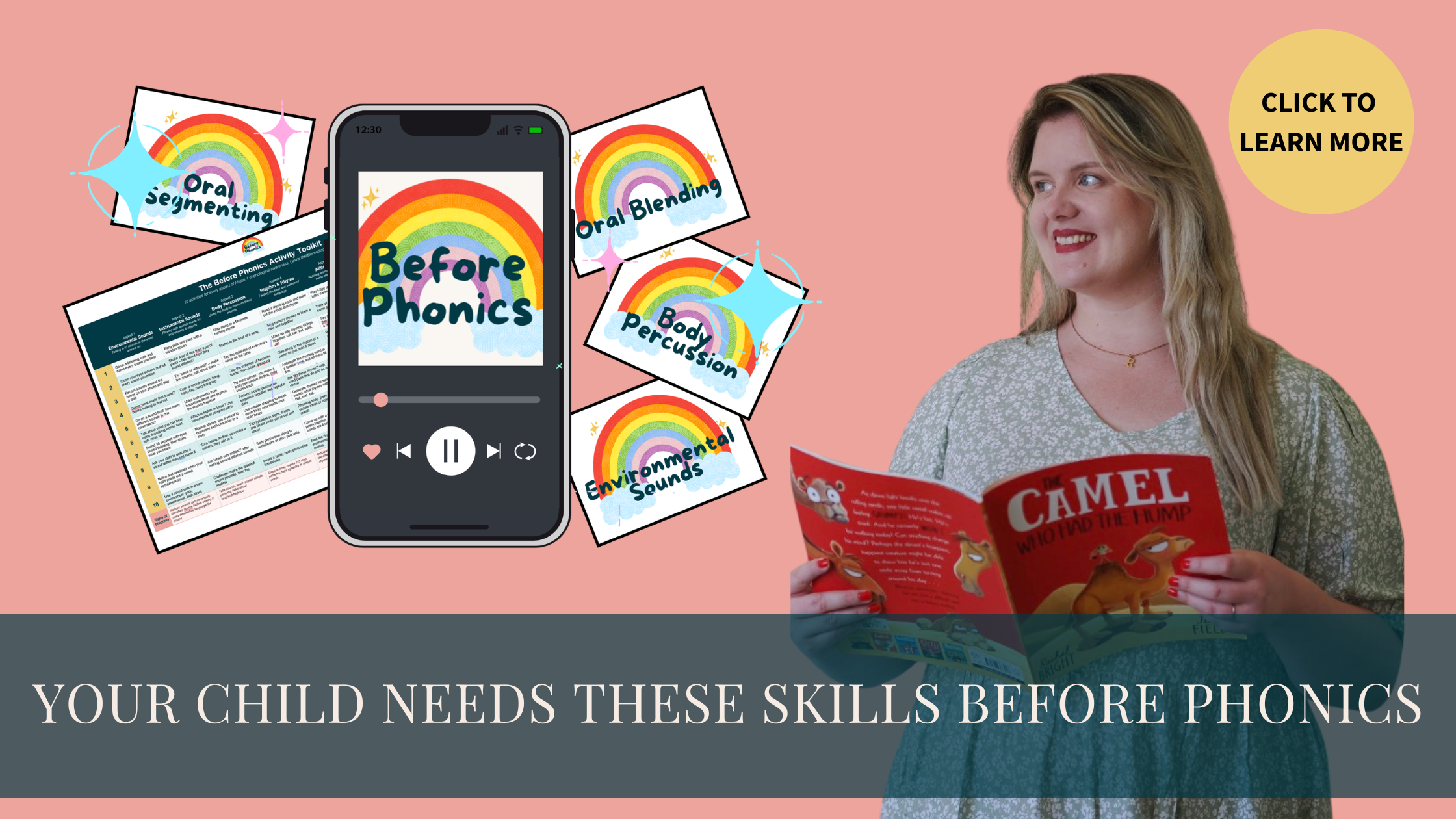
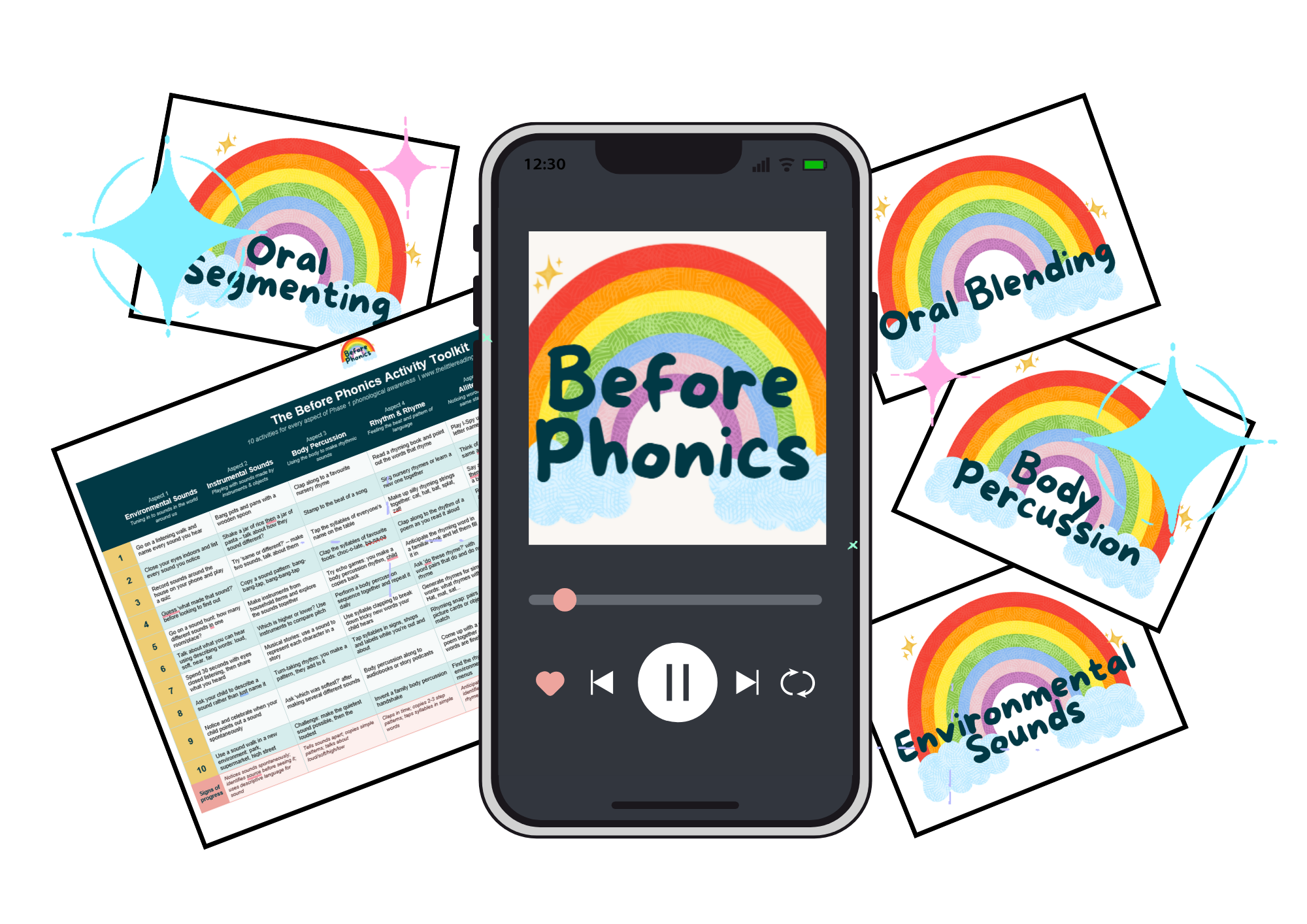
That's exactly why I made Before Phonics. It's everything parents need to focus on at home with their little one before they begin learning phonics, made by a mum who is doing the exact same with her own pre-schooler.
Whether you're looking for preschool summer activities to fill the long holidays or simply want ideas to weave into your day, the following activities all help strengthen the skills children use when they begin learning to read.
- Go on a Listening Walk
- Sing Nursery Rhymes Together
- Clap Words Into Beats
- Play "I Spy"
- Read Together Every Day
- Tell Silly Jokes
If you want a free checklist of skills all children need before learning phonics, click here to download your copy now.
Want to Feel Confident About Supporting Your Child Before School?
If you're anything like the parents I speak to every week, you're probably not looking for hundreds of activities or another overwhelming checklist.
You simply want to know you're focusing on the right things.
That's exactly why I created Before Phonics.
It's a step-by-step programme designed for parents of pre-schoolers who want to give their child the best possible start without turning home into a classroom.
Inside, I'll guide you through the skills that come before letter sounds, explain what really happens during Phase 1 phonics, and show you simple, play-based activities that fit naturally into family life.
You'll come away knowing exactly what to focus on and, just as importantly, what you don't need to worry about.
👉 Find out more about Before Phonics here.
Some Final thoughts
Before you put pressure on yourself to teach another letter sound or print another worksheet, remember this:
Children don't become confident readers because they've rushed through learning before school starts. They become confident readers because they've built strong foundations by learning how to tune into and manipulate sound, and developed a love of reading by sharing stories and books with their safe person. If you spend this summer talking, singing, reading and playing together, you'll already be giving them one of the best starts you can.

"What do I do with my child before phonics?"
The most important reading skills are taught before letter sounds are even introduced, but that little tidbit isn't widely known to parents... 👀
Download the free checklist of skills your child needs before learning to read.
Your information is safe and I will only send you nice things.